Commercial electrical work demands a completely different level of mechanical durability, fire/plenum protection, and inspection readiness than residential wiring. Scotty Electric Co. specializes in small ground-up commercial buildings, retail and medical/office tenant build-outs, warehouse expansions, and responsive commercial service across Tulsa and the surrounding area.
Small Commercial Ground-Up Builds & Tenant Finish-Outs
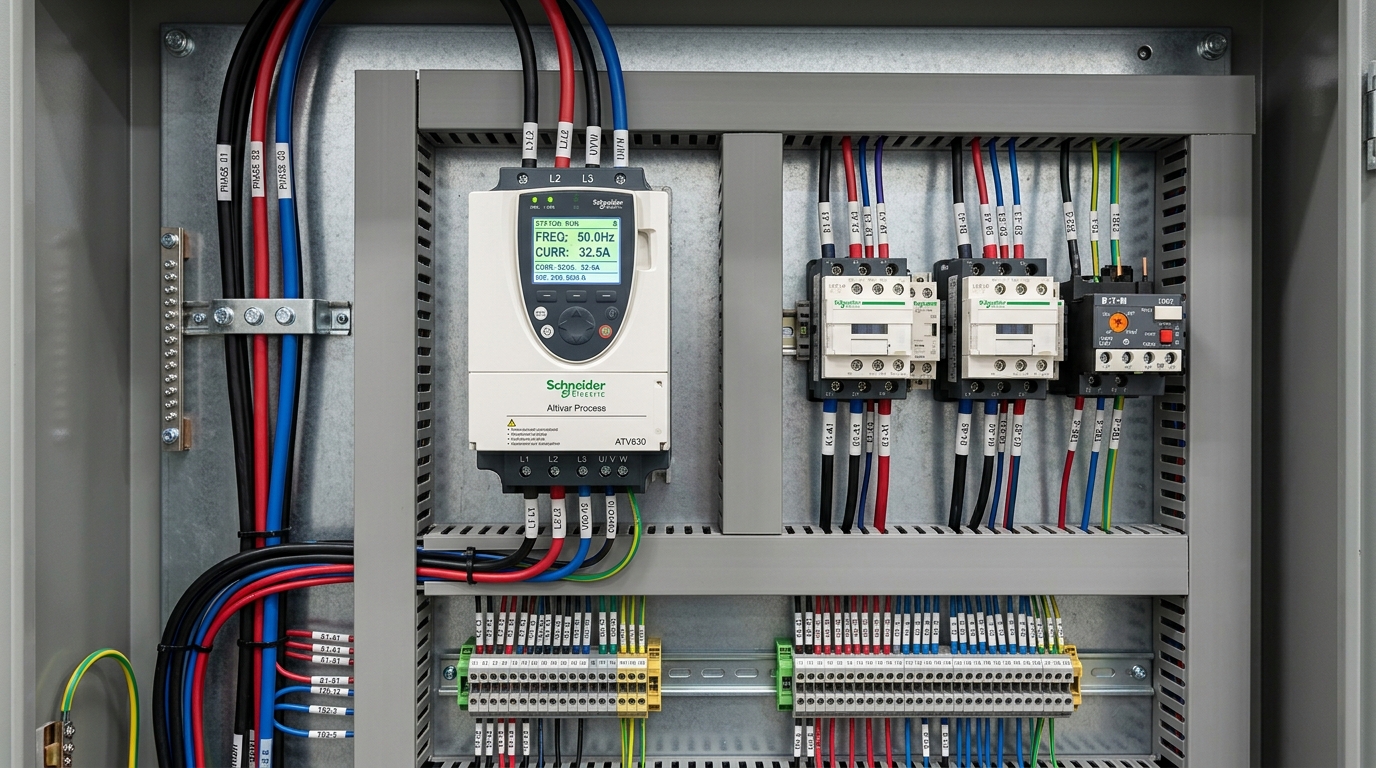 FIELD INSTALLATION EXAMPLE
When you are opening a new storefront, medical clinic, restaurant, office suite, or warehouse bay, schedule delays cost real money. We coordinate directly with general contractors, building owners, local municipal inspectors, and PSO/OG&E/local electric co-ops to keep rough-in, ceiling grid trim, and final inspection moving on time.
Our commercial wiring is executed in precision-bent EMT conduit, MC metal-clad cable, and rigid/PVC underground raceways—supported independently of drop-ceiling grid wires.
- 120/208V and 277/480V 3-Phase Services, Step-Down Transformers & Panelboards
- Retail, Office, Restaurant & Warehouse Tenant Finish-Outs
- Interior LED Troffer, High-Bay & Exterior Parking Lot/Wall-Pack Lighting
- Dedicated Roof-Top Unit (RTU) HVAC Feeds & Weatherproof Service Receptacles
Per NEC 210.63, whenever we wire commercial HVAC equipment on a roof or mechanical yard, we ensure a 125V, 15A or 20A GFCI service receptacle is installed within 25 feet on the same level so HVAC technicians never have to haul extension cords up ladders.
Emergency Egress Lighting, Exit Signs & Commercial GFCI Compliance
Fire marshals and commercial building inspectors pay close attention to emergency egress lighting and commercial GFCI protection. Emergency exit signs and dual-head battery backup units must be wired to the unswitched line side of the local area lighting circuit so that if that specific room's lighting breaker trips, the emergency lights illuminate immediately.
We also audit, repair, and upgrade commercial breakrooms, commercial kitchens, wash bays, and outdoor sign circuits.
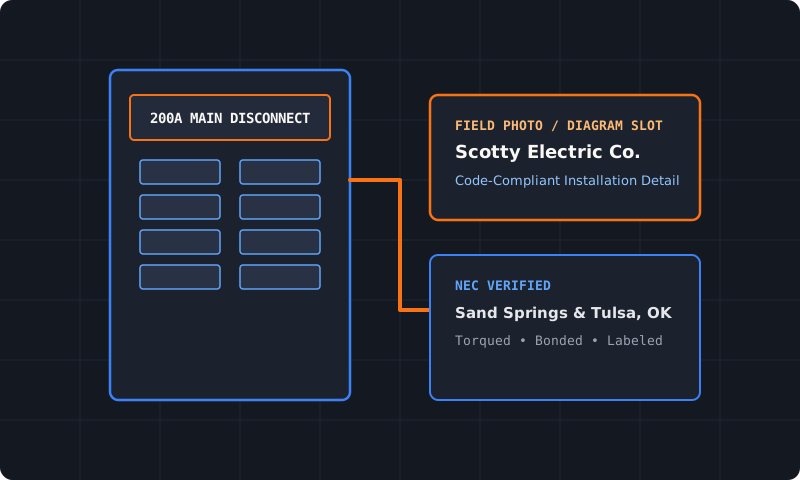 TECHNICAL SPECIFICATION
What We Find vs. How We Build It
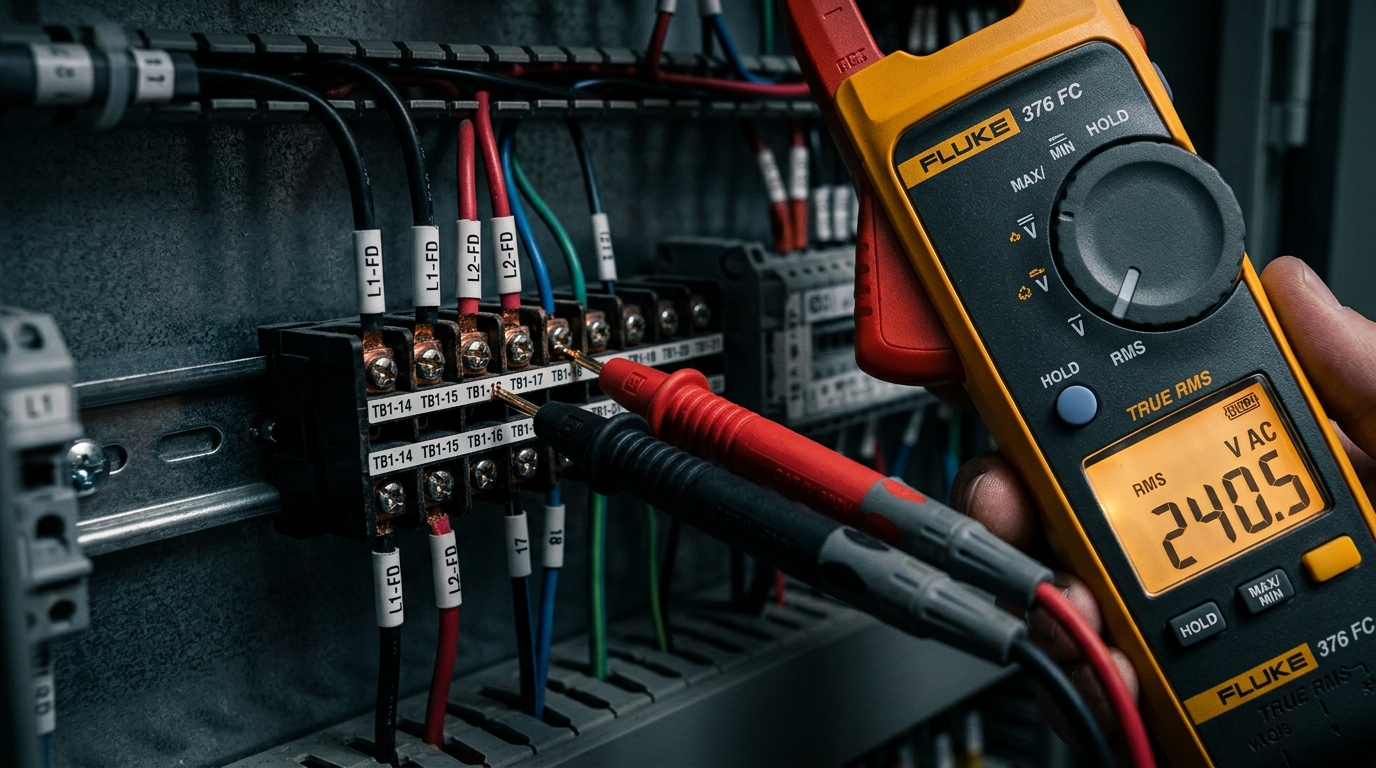

Why We Do It This Way — Commercial Construction Code Items
Here are the essential National Electrical Code requirements that distinguish commercial construction from residential work:
Independent Support of Raceways & Boxes Above Suspended Ceilings
Wiring, junction boxes, and MC cables above acoustic drop ceilings cannot simply be laid directly on top of the ceiling tiles or strapped to the ceiling grid's support wires—they must be independently supported from the building structure or dedicated support wires clipped at both ends.
Prevents heavy cables and junction boxes from sagging or collapsing ceiling tiles during a fire or ceiling remodel.
Emergency Illumination & Local Area Lighting Circuit Tie-In
Emergency egress lighting unit equipment must be supplied by the same branch circuit that supplies the normal lighting in that exact area, connected ahead of any local switches.
Guarantees that if the breaker feeding your hallway or sales floor lighting trips—even while the rest of the building still has utility power—your emergency battery lights turn on automatically.
EMT Conduit & Plenum Air-Handling Space Protection
Many commercial drop ceilings serve as return-air plenums for the HVAC system. Nonmetallic cables (Romex) or PVC jacketed cables that release toxic smoke when burned are strictly prohibited in environmental air plenums.
Protects building occupants from toxic smoke inhalation via the HVAC system and shields wiring from mechanical damage.
Commercial Kitchen, Breakroom & Indoor Wet/Damp GFCI Protection
Requires GFCI protection in non-dwelling occupancies for all 125V–250V receptacles in kitchens, employee break areas with sinks, rooftops, outdoors, and indoor wet locations.
Keeps employees and customers safe around commercial coffee brewers, prep sinks, pressure washers, and floor scrubbers.