Oklahoma ice storms, spring severe weather, and high-wind grid outages make reliable backup power essential. At Scotty Electric Co., we design and wire both permanent automatic standby generators and heavy-duty portable generator inlet systems. Every installation is engineered around two critical principles: preventing dangerous utility backfeed and matching your generator's capacity to your building's actual electrical demand.
Automatic Standby Generators vs. Portable Power Inlet Systems
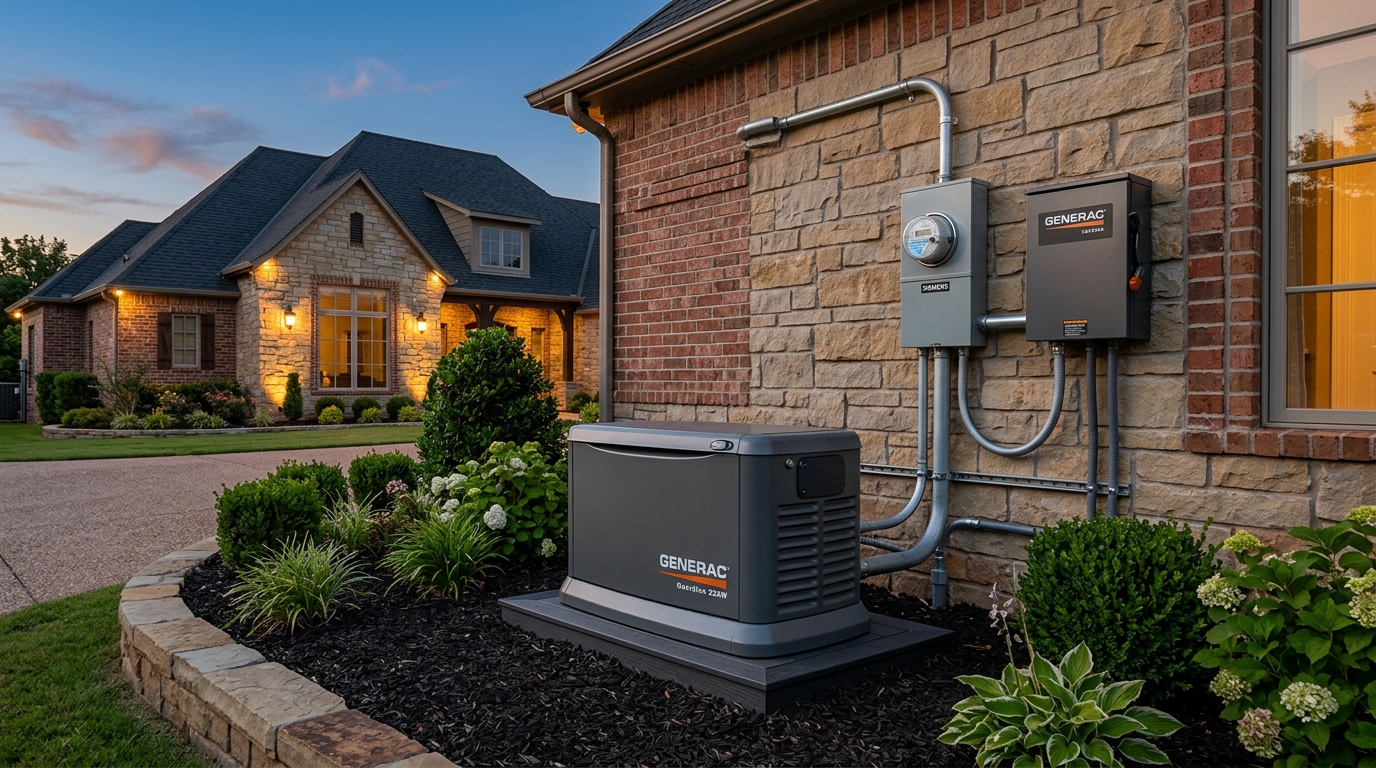 FIELD INSTALLATION EXAMPLE
Customers generally choose between two approaches: an Automatic Standby Generator (fueled by natural gas or propane with an Automatic Transfer Switch) or a Portable Generator connected via a weatherproof exterior power inlet box and a mechanical panel interlock.
Both options are completely safe and code-compliant when installed properly. What is never safe—or legal—is backfeeding a home through a dryer outlet using a double-male 'suicide cord.' Any connection between a generator and a building's wiring must physically isolate the utility service conductors before the generator can feed the busbars.
- 200A & 400A Service-Entrance Automatic Transfer Switches (ATS)
- Listed Mechanical Breaker Interlock Kits for existing main lug/main breaker panels
- 30A (L14-30P) and 50A (CS6375 / SS2-50P) exterior weatherproof power inlet boxes
- Dedicated Essential-Circuits Subpanels for targeted backup coverage
Before quoting a standby generator, we perform a formal NEC Article 220 load calculation rather than guessing by square footage. This frequently saves homeowners thousands of dollars by pairing an appropriately sized air-cooled generator with smart HVAC load-management modules.
Load Sizing, HVAC Starting Inrush & Smart Load Management
When an automatic transfer switch commands a generator to take over the whole house, the code requires that the generator either be large enough to carry the entire calculated load at once, or utilize an automatic load management system.
Central air conditioners, heat strip furnaces, electric ranges, and well pumps draw high locked-rotor starting current. We integrate smart load-shed relays on heavy 240V appliances so your generator never stalls or drops frequency when a second AC compressor kicks on during an August outage in Tulsa.
 TECHNICAL SPECIFICATION
Neutral-to-Ground Bonding: Floating vs. Bonded Neutrals
One of the most misunderstood details in generator work is how the neutral conductor is handled. Most residential transfer switches (2-pole switches) do not switch the neutral conductor—meaning the generator utilizes the main service panel's neutral-to-ground bond.
If a generator also has its own internal neutral bonded to its frame while connected through a 2-pole transfer switch, objectionable neutral current will flow across the equipment grounding conductor. We verify and configure the generator's neutral bond to match the exact transfer switch topology.
TECHNICAL SPECIFICATION
What We Find vs. How We Build It
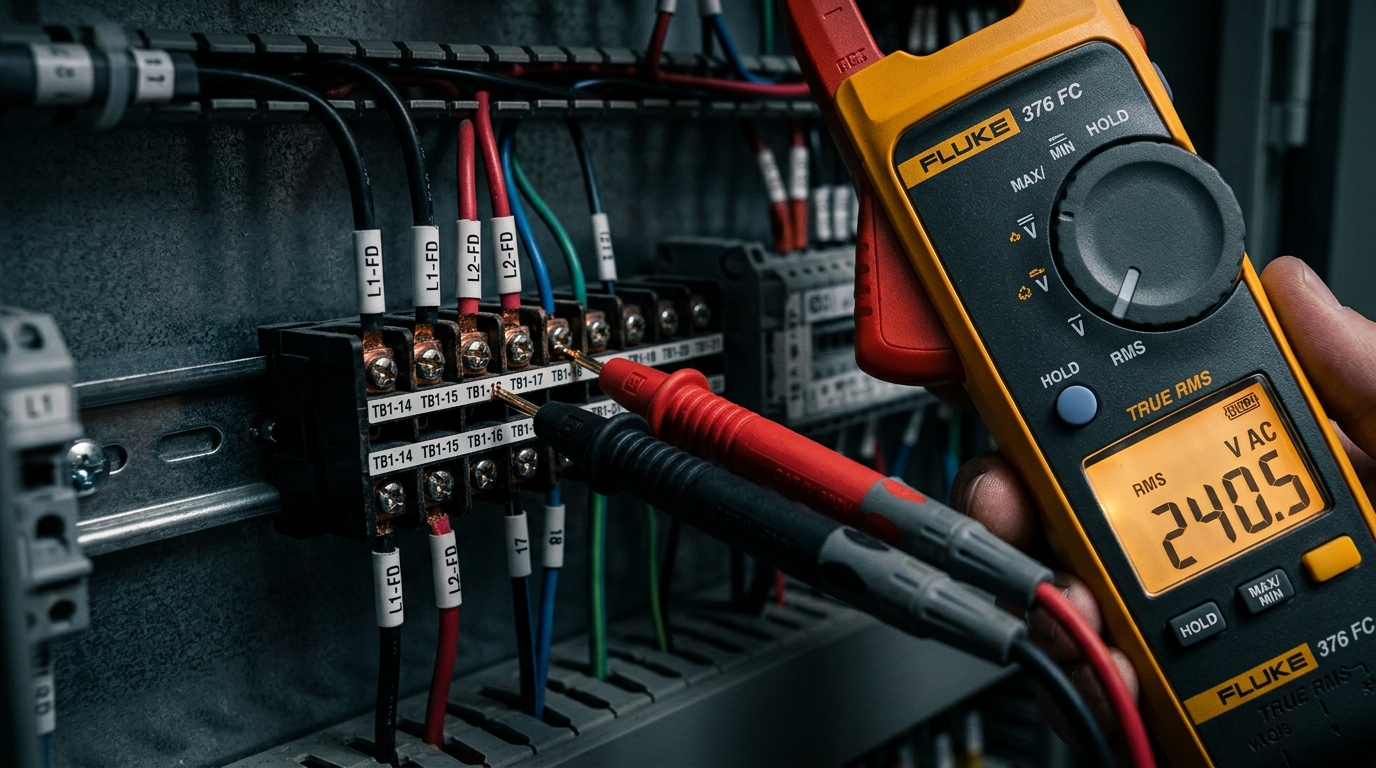

Why We Do It This Way — Common Generator Code & Safety Items
Here are the specific National Electrical Code requirements that most commonly affect homeowners and commercial property owners installing backup power:
Transfer Equipment & Utility Backfeed Prevention
Transfer equipment (either an Automatic Transfer Switch or a listed mechanical breaker interlock) is required for all fixed or portable optional standby connections so that utility power and generator power can never be connected to your panel busbar at the same time.
Prevents lethal backfeeding onto downed utility lines (protecting utility linemen) and prevents utility voltage from violently destroying your generator stator the moment grid power comes back on.
Capacity & Automatic Load Management
For manual transfer systems, the user manually chooses which breakers to turn on. However, for automatic transfer switches (ATS), the generator must either be sized for the full calculated load of the building OR use listed automatic load-shedding controls.
Allows us to legally and safely connect a 22kW–26kW air-cooled standby generator to a large all-electric home by automatically managing secondary HVAC units, EV chargers, or ovens.
Generator Disconnecting Means & Emergency Shutdown
Generators require an accessible disconnecting means that can lock out the generator output, plus an exterior emergency shutdown provision for permanent outdoor standby units.
Gives first responders and service technicians an immediate, clearly marked way to shut down generator power during an emergency or maintenance call.
Separately Derived vs. Non-Separately Derived Grounding
When a transfer switch does not switch the grounded (neutral) conductor, the generator is NOT a separately derived system, meaning the neutral-to-ground bond must remain solely at the main service disconnect—not duplicated inside the generator.
Eliminates parallel neutral current paths on metal frames and conduit, preventing nuisance GFCI trips and stray shock hazards.
Permanent Signage at the Service Entrance
A permanent plaque or directory must be installed at the exterior service entrance equipment indicating the type and location of on-site optional standby power sources.
Ensures utility crews, inspectors, and future electricians immediately know the building has an auxiliary power source and whether the neutral is bonded or floating.